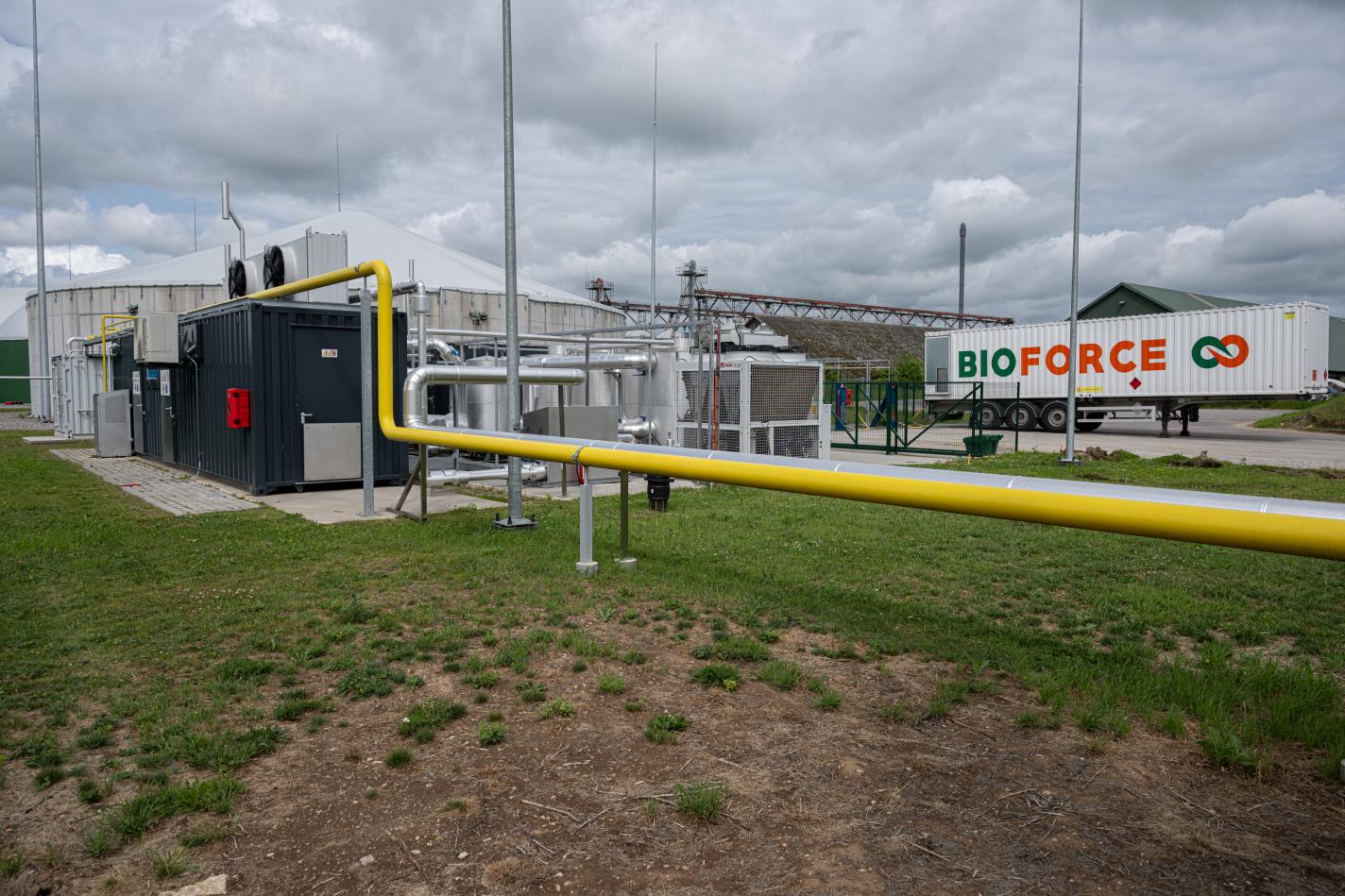
According to Põllumajandusuudised, Estonian renewable-gas company Bioforce Infra OÜ will receive €2M from the Environmental Investment Centre (KIK) to build a public biomethane injection point in Ebavere, Lääne-Viru County. The 31.5 MW facility will allow biomethane produced in the region to enter Estonia’s gas transmission network directly.
Support for regional biomethane producers
Bioforce Infra will operate the injection point as public infrastructure. For at least five years after the project is completed, all market participants must have equal access to the facility. The company will also apply the maximum service fee permitted for receiving biomethane.
The new connection is designed to address a constraint in the existing local network, which cannot accept all of the biomethane produced in the area at the required volume. Without the facility, producers like Bioforce must rely on alternative logistics arrangements to bring their output to market. Those arrangements add cost and complexity and limit the use of existing production capacity.
Karl Koort, a member of Bioforce Infra’s management board, said the injection point would serve more than one production unit by creating a shared connection for biomethane from other market participants in the region.
“This is not merely a solution based on the needs of one production unit, but regional infrastructure through which the biomethane of other market participants can also be brought into a shared network connection,” Koort said.
Biomethane production and wider uses
Bioforce Group opened a biomethane plant in Ebavere capable of processing up to 130,000 tonnes of biodegradable material a year. The plant can provide annual fuel supplies for more than 80 gas buses, with production of about 36,000 MWh, following an investment of nearly €10M in its construction.
The new injection point will broaden the potential uses of locally produced biomethane beyond transport. Jaanus Uiga, deputy secretary general for energy and mineral resources at Estonia’s Ministry of Climate, said direct access to the gas network would help renewable gas reach consumers and gradually replace fossil natural gas.
Kätlyn Kangur, KIK’s coordinator for energy measures, said biomethane could also replace natural gas in industry and serve as a renewable source for electricity and heat production.
KIK has previously supported the construction of biomethane plants in Halinga, Tahula and Viiratsi, as well as gas buses and refuelling stations using biomethane in Estonia.
Interested in investing in Estonia? Explore business opportunities in Estonia or request e-Consulting from Invest Estonia’s advisors.