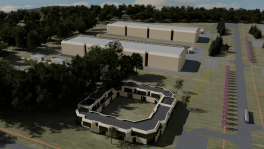
The Estonian power grid is steadily building up more resources to accommodate growing demand from smart industries and meet sustainability goals. A new major milestone in this transition has been reached this week, with the completion of a 200 MWh battery park in Kiisa, just south of Tallinn.
The €100M facility, built by Estonian company Evecon alongside French partners Corsica Sole and Mirova, features 54 battery containers and represents continental Europe’s largest battery storage complex.
Battery storage is becoming critical for modern electricity grids, especially as countries increase their use of renewable energy sources like wind and solar, which produce power intermittently. Estonia is actively utilising both, putting online large solar and wind installations. Soon, these massive batteries will act like a buffer, storing excess electricity when production is high and releasing it when demand peaks or renewable generation drops.
“The strengths of storage units are that they respond quickly and are highly flexible,” explained Elering board member Erkki Sapp to ERR. The facility will help maintain stable electricity frequencies across the Baltic region and smooth out price spikes by shifting power from low-cost hours to peak demand periods.
The Kiisa facility is already operational on the day-ahead electricity market, with full reserve market participation planned for early 2025. But this is just the beginning: a second 400 MWh complex is under construction in nearby Aruküla, which will double the total capacity.
Estonia’s grid operator Elering projects the country will need 400 MW of storage capacity by 2035 to ensure supply security, though actual deployment may exceed this as interest in battery technology grows across the Baltics.