Estonia continues to develop its energy grid to offer the best conditions for business and consumer users. This week, energy company Gren has announced plans to invest in two new 30-megawatt power plants, one in Tartu and another in Ahtme, Ida-Viru County. The project, secured through Elering’s frequency reserve tender, will strengthen the country’s electricity infrastructure.
The new facilities will provide a combined 60 megawatts of frequency reserve capacity, which is essential for maintaining Estonia’s electricity system stability and operational integrity. “For Estonia’s future security of supply, it is critically important to ensure the availability of a sufficient number of fast-responding power plants,” emphasized Erkki Sapp from Elering’s management board.
Frequency reserves act as the electricity system’s safety net. When power production and consumption fall out of balance – common when renewable sources like wind and solar fluctuate due to weather and timing – the grid’s frequency wavers. Frequency reserves provide rapid-response power that corrects these imbalances within seconds, preventing potentially catastrophic system shutdowns.
Since this year, Estonia operates within the Continental European synchronous area, the country must independently maintain its own system balance, making these fast-acting backup facilities essential infrastructure.
Future-ready technology
Both plants will initially run on natural gas but incorporate forward-thinking design: they’re being built with the capability to use biomethane and incorporate hydrogen into the fuel mix as cleaner alternatives become more available. This positions Estonia to maintain grid stability while transitioning toward greener energy sources.
The facilities are scheduled to be operational by the end of 2027, with both plants contributing to Estonia’s long-term energy security strategy.
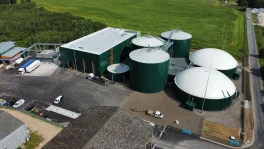
Gren brings proven experience to the project, already operating two combined heat and power plants in Estonia that simultaneously generate electricity and thermal energy. “We have a top-level local team, long-standing experience in operating combined heat and power plants, and the technical capability to deliver such a service,” said Margo Külaots, Head of Gren in Estonia.