In a small village of Vägari in East Estonia, Dutch entrepreneurs are making one of the country’s largest foreign direct investments, betting that the nation’s forests and can-do attitude will power the next generation of maritime fuel and more.
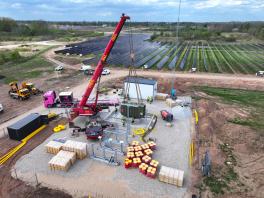
Perpetual Next, an Amsterdam-based biomethanol producer, is investing to expand its operations in the Baltania plant, where the company already owns and constructs a torrefaction facility that converts wood waste into biocarbon. “Total investment will be around €800M, with full confidence that it will be a growth engine optimised for the upcoming changes in the transportation industry,” says Rene Buwalda, CEO and member of the board at Perpetual Next N.V.
The initial investment decision has already been agreed within the company, and the ambitious project will add methanol production capabilities, targeting the rapidly growing market for clean maritime fuels.
“We are quite different, we take the hands-on approach instead of just throwing money or investing and if it’s difficult, pulling the plug,” says Jurre Hijman, a board member of Perpetual Next Estonia.
Up the value chain: from wood waste to maritime fuel
The investment will be a big thing for Estonia’s industrial landscape. Perpetual Next plans to take the country’s abundant wood residues and eventually transform them into biomethanol, a high-value export commodity that can sell for significantly more than traditional wood pellets. Currently, Estonia is already a big player in the commodities business — the country’s wood industry has a yearly export value of €3B.
The technical approach combines Perpetual Next’s proprietary torrefaction technology with proven large-scale gasification and methanol synthesis systems. Wood waste is first converted to biocarbon through torrefaction, then gasified to create synthetic gas, which is finally converted to methanol.

“We work with the base material of Estonia… but we bring it to the highest value for trading and that is methanol,” explained Buwalda, who served as construction director during the initial facility build-out.
The timing couldn’t be better. New International Maritime Organization (IMO) regulations requiring cleaner shipping fuels have created a captive market for biomethanol. As Hijman noted, “For the coming 20 years, the shipping industry will be in need for methanol because you buy a ship not for two years or five years, but you build for 20 years”.
The facility will produce 220,000 tonnes of biomethanol annually, requiring 313,000 tonnes of biomass. Major shipping companies have already made billion-dollar investments in methanol-capable vessels, providing long-term demand certainty.
Estonia’s competitive edge
For Perpetual Next, which operates facilities across Europe and has projects in development from the Netherlands to the United States, Estonia stood out for several reasons beyond feedstock availability.
As Buwalda put it, “Estonia gets things done,” recounting his experience managing construction during the COVID-19 pandemic. “Where everybody started getting lazy in Europe, the Estonian people kept working and finished the project in time. Even during that strong winter… I’ve never seen in the world that this construction site was partly finished in the winter.”

The company has been impressed by Estonia’s streamlined permitting process and proactive government support. Estonia’s compact size also proved advantageous. “It feels like a city and not like a country. So everybody knows each other… it’s a real open culture, and you even feel welcome,” Buwalda says.
Workforce development and infrastructure opportunities
The project opens a lot of opportunities for skilled workers. While finding people with chemical industry experience is not the easiest task, the company is creating comprehensive training programs in partnership with international firms and local universities.
“We have time to train the people,” Buwalda noted, as equipment installation opens a window for workforce development. The collaboration could establish Estonia as a regional centre for chemical industry expertise.
The scale of production would also need to trigger changes in the infrastructure. Moving 220,000 tonnes of methanol annually will require serious logistics solutions, potentially catalysing upgrades to Estonia’s rail and port systems.
A rail connection exists just three kilometres from the facility. Port authorities in Tallinn and western Estonia are exploring options for handling liquid chemical exports, with details to clarify as the construction goes forward.
“On the feedstock side, on the permitting side, on the torrefaction project, Estonia is doing great. On the infrastructure side and on the offtake, there’s room for improvement, but it’s a thing to be solved towards the Final Investment Decision on later stages of the project.” Hijman observed.
For Perpetual Next, the project is important in another regard. The Estonian facility serves as more than just a production site, but as a standardised “blueprint” that the company plans to deploy across multiple countries.
As Buwalda explained, “All the projects are the same. So always 220,000 tonnes of methanol based on the same volumes. So that’s what we call the blueprint”. The company has similar facilities planned for the Netherlands, the United States, and other European locations.
Economic impact and timeline
The expansion will significantly boost local employment, growing from the current 36 workers to approximately 70 direct employees, with additional indirect jobs supporting the operation. “This investment is extremely important both regionally and for Estonia, while also contributing to the development of a clean economy across the EU. The planned plant will add value to local resources and bring high-skilled jobs to the region. It is a pleasure to note that the Estonian and Dutch business cultures are similar, and we can offer great value to one another,” says Ilmar Branno, Investment Manager at Invest Estonia, who has overseen and advised the project in his previous role as Director of Regional Business Development in East Estonia.
The company has already invested over €60 million in its Estonian operations, with €200 million allocated for expanding the torrefaction facility and €600 million for the new methanol plant. Construction of the first new reactors began in September 2025, with contracts for equipment suppliers to be signed in the coming weeks.
The first new reactor should be operational by late 2027, with the possibility of scaling to four reactors over time.
Interested in tapping into new energy? Book a time via e-Consulting to speak to your personal investment advisor about doing business in Estonia.