Estonia is no stranger to being the first in official digital adoption — already succeeding in making all governmental services online, using blockchain inspired technology and i-voting. Now it’s time to take this approach into the AI era. The Estonian government unveiled Eesti.ai on Tuesday, an ambitious national program that aims to systematically implement artificial intelligence across all sectors, with the goal of doubling the value of Estonian work by 2035.
Prime Minister Kristen Michal launched the initiative alongside Bolt founder Markus Villig, who will chair the international advisory council driving the program. The council brings together Estonian tech leaders, including IT visionary Linnar Viik and entrepreneurs Sten Tamkivi (Skaala), Kaspar Korjus (Pactum), and Taavi Madiberk (Skeleton), working alongside international experts and sector representatives.
“AI development is accelerating and competition in the global economy is intensifying, so Estonia as a digital nation has a tremendous advantage here,” said Prime Minister Michal. “Through public-private collaboration and smart use of data, we can develop new and powerful AI applications and capabilities that other countries cannot, and put them to work for our economy.”

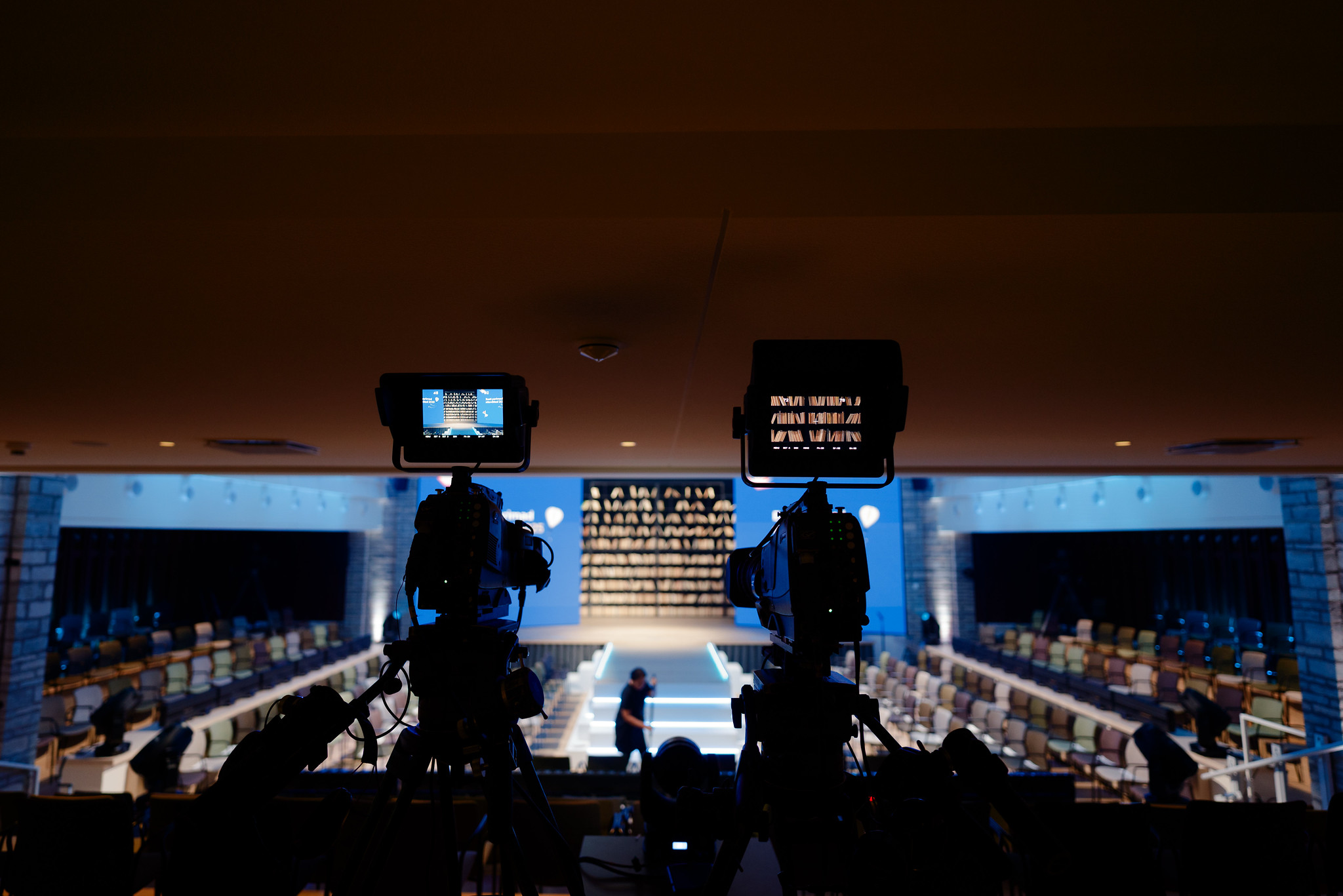
Estonia AI launch meeting. Photo by Ramon Shultz for Stenbocki maja
Ambitious economic goals
Eesti.ai targets strong economic goals: a 25% increase in GDP within 5 years and 50% growth (equivalent to €20B) by 2035. The initiative addresses a critical challenge, present across many other developed economies — workforce shortages caused by demographic trends — by leveraging artificial intelligence to enable fewer people to accomplish more sophisticated, higher-value work.
“Through public-private collaboration and smart use of data, we can develop new and powerful AI applications and capabilities that other countries cannot, and put them to work for our economy.”
Kristen Michal, Estonian Prime Minister
“It’s a pretty sensible initiative,” Tamkivi told the news publication Äripäev, explaining that the State Chancellery approached various entrepreneurs to collaboratively determine how Estonia can keep pace with AI developments.
Rather than spreading resources thin, Eesti.ai will concentrate on a few high-impact projects selected this spring and executed through public-private partnerships, mainly in industry, education, healthcare, energy, environment, transport, finance, and security.
Building on existing success
The program amplifies ongoing projects, including the AI leap in education led by the President, public sector AI applications managed by the Justice and Digital Minister, and existing drone initiatives. As a digital nation, Estonia’s competitive advantage lies in its data infrastructure, such as the X-road system, and this will serve as the essential foundation for effective AI implementation.
The advisory council, functioning as a government commission with the Prime Minister present at all meetings, will meet in April this year, after which it will convene quarterly and submit annual reports. A dedicated AI team in the State Chancellery will coordinate operations, while an inter-ministerial working group handles implementation.
“In the coming months, we’ll determine exactly what activities and scale the program should include. The goal is to focus on fewer but significant, high-impact projects so that something important can be accomplished within the next 1.5 years,” said Sten Tamkivi.
The State Chancellery’s AI initiative will be led by Kirke Maar, who previously served as head of strategy and international cooperation at Tallinn University of Technology and led AIRE.
Funding will initially leverage existing support programs and EU resources, with budget adjustments planned for spring-summer 2026 once precise financial requirements are determined.