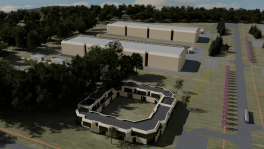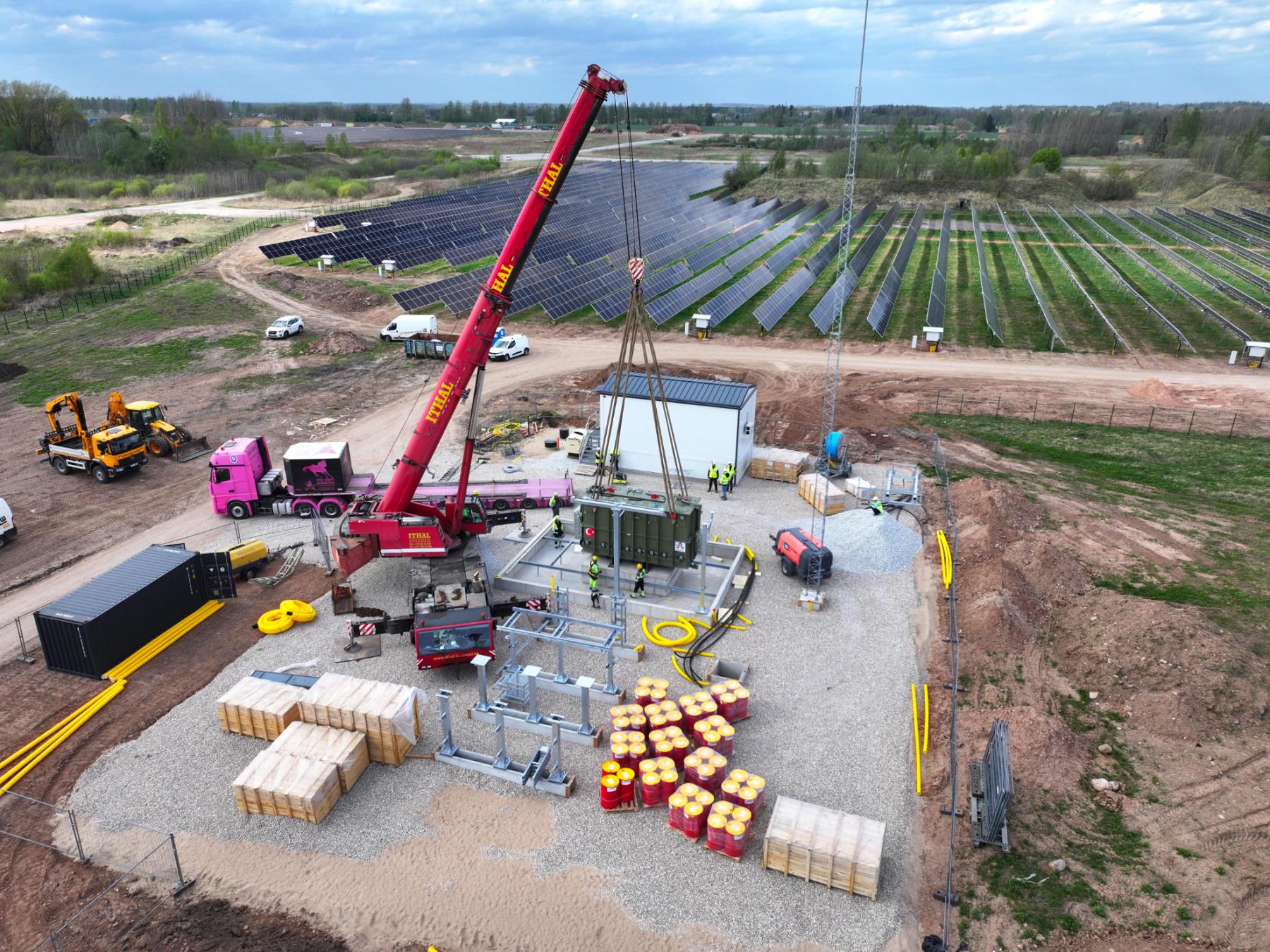
Estonian energy infrastructure company Smartecon, part of Verston Group, has signed an engineering, procurement and construction contract to build the Raudsepa battery storage facility in Tsirguliina, southern Estonia — one of the largest such projects in the Nordic and Baltic region by power and storage capacity.
The Raudsepa facility will have a power capacity of 192 MW and an energy storage capacity of 420 MWh, Smartecon announced. The EPC contract covers design, equipment supply, construction, commissioning and grid code compliance, including building a 330 kV substation. Construction begins in September 2026, with full operation expected by November 2027.
The project is jointly owned by Taaleri Energia‘s SolarWind III Fund, a co-investor in the fund, and KJK Fund III, managed by KJK Capital. It was developed by Estonian renewable energy company Evecon and French independent power producer Corsica Sole, the partners behind the Hertz battery parks near Tallinn, which reached a combined 200 MW and 400 MWh when Hertz 2 went fully online in July. Raudsepa will use LG Energy Solution battery storage equipment and European-made inverters from Power Electronics.
Integrated delivery for a major battery storage project
Delivering Raudsepa requires expertise in both energy systems and infrastructure construction, according to Magno Kure, Smartecon’s CEO. “We are responsible for delivering the entire facility, from design through to commissioning. The engineering challenge lies in integrating the battery storage equipment, control systems and 330 kV substation into a fully functioning system that meets grid code requirements. We manage equipment supply, construction and commissioning as one integrated process,” said Kure.
Battery storage helps balance electricity generation and consumption throughout the day, stabilise prices and support the grid at critical times.
Verston Group’s energy infrastructure push
Jüri Tamm, co-CEO of Verston Group, said Europe’s infrastructure must be planned with both transport and energy systems in mind. “Reliable connections and a secure energy supply underpin Europe’s economy and security. Alongside energy generation, we need grids and storage facilities that deliver electricity to consumers when it is needed. We commend the client’s decision to procure Raudsepa as a turnkey project, entrusting a single partner with responsibility from design through to commissioning,” said Tamm.
Smartecon, founded in 2012, designs, builds and maintains energy generation and storage solutions and has built more than 1,000 solar power plants across five countries. In 2025, the company reported revenue of nearly €35M and a net profit of €0.3M. Verston, established in 2010, spans roads, railways, energy and urban infrastructure, and is expanding into other European markets, including Poland.
A Finnish fund’s first Estonian battery bet
Raudsepa, about 50 km south of Tartu, is the SolarWind III Fund’s first battery storage investment in Estonia and Taaleri Energia’s fifth investment in the Baltic countries, Taaleri said. The plant will earn revenue from both electricity arbitrage and ancillary services markets. “With high power price volatility and the phase-out of oil-fired generation, Estonia represents a compelling battery storage investment opportunity,” said Ville Rimali, investment director for energy storage at Taaleri Energia.
Evecon and Corsica Sole sold the project to the new owners once it reached a final investment decision. Evecon CEO Karl-Joonatan Kvell said final investment decisions totalling more than €1B have now been made on energy projects the company has initiated in the Baltic states since 2020.
A second large battery plant in Tsirguliina
Raudsepa is the second grid-scale battery plant planned for Tsirguliina. Estonian companies Diotech and Transcom began building the Zirgu battery plant in Tsirguliina in February, a 100 MW / 200 MWh first phase funded entirely by Estonian capital. In June, Diotech announced a battery supply agreement with LG Energy Solution: the cells will come from the Korean company’s factory in Poland and the inverters from Power Electronics in Spain, making Zirgu the first battery plant of its scale whose key components are manufactured in Europe.
The roughly €35M first phase is financed by Swedbank and due for completion by the end of the first quarter of 2027. Designed with black start capability, the plant can help restart a significant part of the grid after a major outage. Its grid connection allows expansion to 200 MW and 800 MWh within six to nine months, which would make it the largest battery storage plant in the Baltic states.
Zirgu’s developers took part in Enterprise Estonia’s business visits to South Korea, one of the agency’s main target markets outside Europe. The visits “have helped create valuable contacts and build long-term partnerships,” said Mari-Liis Küppar, a member of Enterprise Estonia’s management board.
Once Zirgu’s first phase and Raudsepa are online, they and the Hertz parks will total about 490 MW of battery capacity, above the 400 MW of storage that grid operator Elering projected Estonia would need by 2035. Local players also go abroad. In Latvia, Tallinn-based Sunly has contracted Rolls-Royce to build four battery systems totalling 490 MWh.
Interested in investing in Estonia? Explore Energy opportunities. For tailored guidance, request e-Consulting from Invest Estonia’s advisors.