If you want to be part of the next great Estonian success, get in touch through our 1:1 e-Consulting service and let’s find the smartEST investment for you!
Three years ago, Canadian company Neo Performance Materials made a bold bet on Estonia, choosing the Ida-Virumaa region as the site for Europe’s first rare earth permanent magnet manufacturing facility. Now, as the company gears for the grand opening of its factory in Narva, the investment is paying off in spectacular fashion.
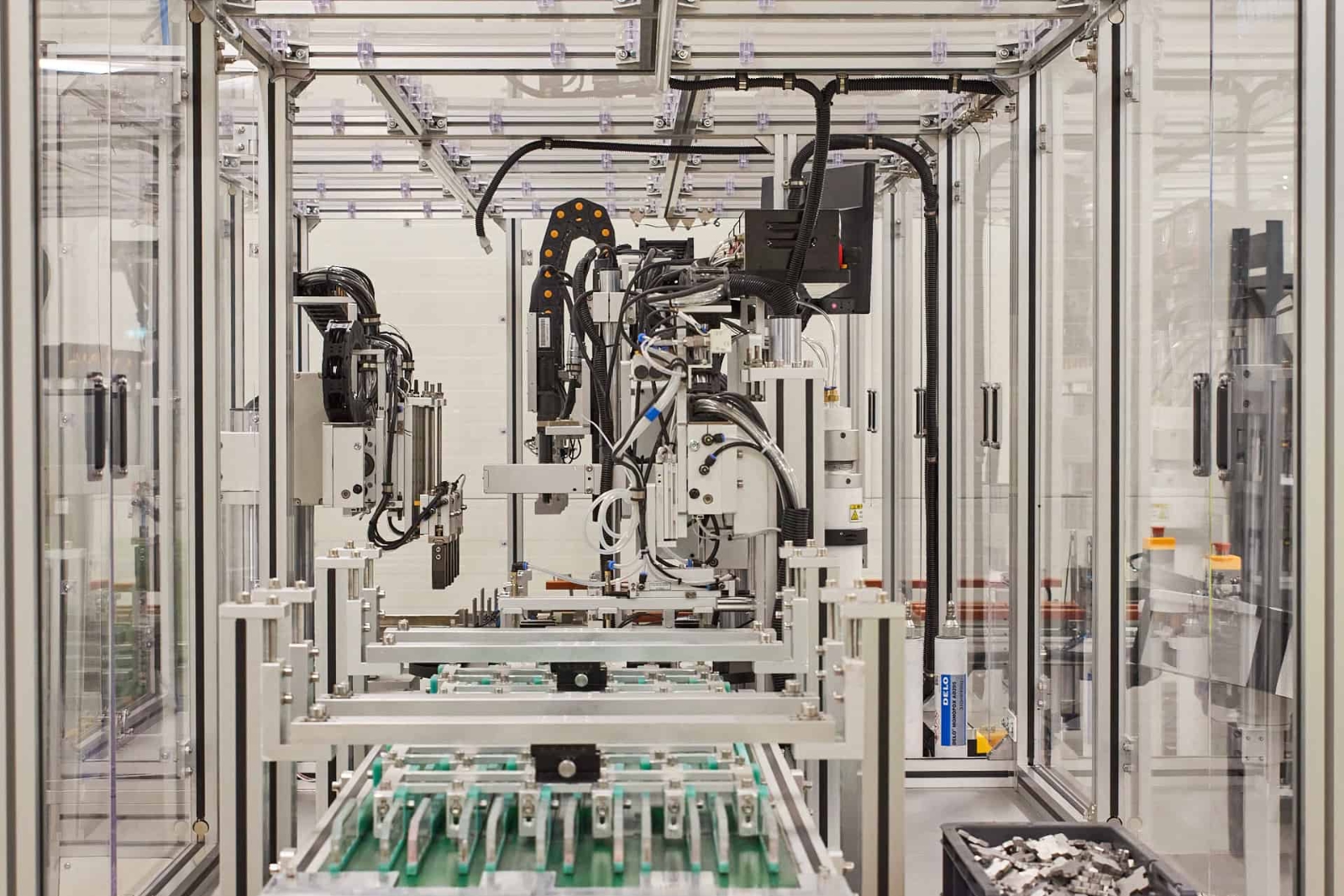
The 2,000-tonne capacity facility represents more than just a manufacturing plant, but a decisive step in Europe’s strategy to reduce dependence on Asian suppliers for critical materials needed in electric vehicles and offshore wind turbines. With production already underway since May 2025 and nearly 100 employees on staff, the factory stands as the fastest-built, most competitive plant of its kind in recent years.
We spoke with Vasileios Tsianos, Vice President of Corporate Development at Neo Performance Materials, about the journey from concept to reality, the challenges overcome, and the ambitious plans ahead.
As we approach the grand opening, could you explain where exactly the project stands today and what’s coming online?
Three years ago, our company set out to develop a rare earth magnet plant that would operate at an industrial scale, producing at the very high and demanding specifications required by the European automotive and offshore wind turbine industries. The challenge was that there was no plant of this kind outside of Asia—nothing in Europe that produced to the specifications the European automotive and wind industries required, and certainly none in North America.

Vasileos Tsianos. Photo: EU Chamber of Commerce in Canada
We had the benefit of already owning a facility doing the midstream rare earth separation in Estonia—the Silmet plant in Sillamäe that we acquired about 15 years ago. When we explored where in Europe we could build such a plant, the Estonian Investment Agency and government were extremely helpful in explaining the opportunities, available land, talent pool, and, crucially, how they would support us in securing financial backing from the European Union, specifically through the Just Transition Fund.
What convinced us to invest in Estonia wasn’t just the opportunity to build one plant, but Estonia’s potential as what we call a “call option” in finance—the upward potential of a future where Estonian entrepreneurial skills, digital expertise, and leadership in AI and machine learning could be applied to physical manufacturing and advanced manufacturing.
The speed of construction has been remarkable. Can you walk us through the timeline?
We made the investment decision about two and a half years ago and broke ground in the last days of June 2023. From groundbreaking to the end of construction, we built this facility in 500 days. To put that in perspective, companies that chose to build similar plants in the US—because they received more government subsidies there— are taking longer and spending four to five times more money.

This speaks to something remarkable: everyone in the community of Ida-Viru County, specifically Narva, everyone in the Estonian government, the Estonian Investment Agency, contractors, and vendors—everyone worked at the speed of necessity to build this plant as fast as possible, as competitively as possible, and as well as possible. This wasn’t a cheap job done fast. We’ve been producing magnets to specification since May, meeting the very high standards required for European automotive and offshore wind turbines.
There’s a saying that it takes a village to raise a child. I really believe it takes a country to achieve what we’ve accomplished here—building faster, more competitively, and better than anyone else. While I’d love to claim this as solely Neo’s victory, it’s truly a joint achievement of everyone who supported this project.
What does the workforce look like currently, and how do you see it evolving?
Right now we have over 80 people employed, and we’ll reach about 100 by the opening. The majority of our current staff are engineers and scientists—STEM graduates, many with masters degrees, some with PhDs. This makes sense because the commissioning of equipment, running initial samples and materials, and installing equipment has been scientifically and engineering-intensive work.
Some of our team members are Estonian, like my colleague Giana, who studied and completed her PhD in Estonia researching the sintering of rare earth magnets—exactly what we’re doing here. But when she finished her studies, there was no such work available in Europe for magnets, so she pursued work in oil and gas in the Baltic and Scandinavian countries. Now she’s working in the exact academic and scientific field she loves.

The same story applies to colleagues from Slovenia, Brazil, Spain, and Egypt—renowned magnetics PhDs who were working in academic research but had no industrial plant in Europe or the Western world where they could apply their skills. We even joke that we have the first “magnet baby”—one of our colleagues who moved here with his wife had a child in Estonia this past year.
These are people choosing to come to Estonia, grow families here, and build something bigger than what we started with in Narva. As the plant scales up, we expect to reach 300-400 staff within 18 months for Phase One alone.
Could you explain the value chain for readers who might not be familiar with the magnet industry?
It’s actually a pretty cool international story. The material comes in from Australia—rare earth material that was mined there and converted to metal. In Narva, we take that rare earth metal and convert it to finished rare earth magnets that go directly as finished goods into electric vehicle motors and offshore wind turbines.
I kept one of the first magnets we produced, which was made with Australian material in Narva, Estonia. I gave it to European Commission President Ursula von der Leyen, who took it to the G7 summit in Canada in June. She showed it to all G7 leaders and gifted it to Canada’s Prime Minister. She even put out a press release explaining how this magnet represented the future of G7 competitive industrial supply chains: material from Australia, a Canadian investor investing in Europe and Estonia, serving German, French, and American automotive customers.
There’s even a photo of Prime Minister Mark Carney holding our magnet at the G7 closing press conference. It shows how Estonia has achieved prominence in the future of competitive G7 industrial supply chains, and the symbolism starts right here with this plant.
What does demand look like for your products?
The demand outlook is explosive, and here’s why: The European Union’s Critical Raw Materials Act and Net Zero Industry Act, implemented a year ago, require automotive, wind, and other key industries to source at least part of their products from within the EU. We’re the first example in the rare earth magnetics industry that makes this compliance possible.
To put our capacity in perspective: if all the magnets from Phase One were sold to automotive, they would supply about one million electric vehicles per year. If sold to offshore wind, they would supply just over a thousand offshore wind turbines made in Europe and North America. But demand is way higher than this, which is why Phase One is just the beginning.
Speaking of expansion, what are your plans for Phase Two?
Phase Two will be built right next door and will be almost twice the size of Phase One, nearly tripling our total capacity. We’ve already built the shared infrastructure for both phases. Phase One cost around €75 million to build—a fraction of what other companies with significant US government support are spending.
Phase Two will serve as a sandbox for applying AI, machine learning, and the digital skills that Estonians and Europeans excel at to the future of competitive manufacturing. This is where Estonia’s unique combination of digital expertise and manufacturing capability will really shine.
What has your experience been like doing business in Estonia, and what would you tell other international companies considering investing here?
Estonia exceeded expectations. It exceeded them by fast-forwarding all administrative, government, bureaucratic, and permitting processes—not by cutting corners or doing us favors, but through genuinely efficient processes. We had to produce extensive independent reports, including “do no harm” reports and climate-proofing reports to qualify for the Just Transition Fund. We followed rigorous regulatory and industry standards.
But what we didn’t lose any time on was approvals and review processes. Everything moved at the speed of our application delivery. Every country promises that investments will be fast-tracked, but often it’s more promise than fulfillment. Sometimes when governments say they’ll fast-forward things, they mean cutting corners. In Estonia, no corners were cut—it was genuinely efficient government process.

My recommendation to companies considering Estonia: don’t assess Estonia only for what it offers now—though it already offers many great things. Assess Estonia for what it’s becoming. Estonia might be known for its startups, unicorns, tech abilities, hosting NATO’s cybersecurity headquarters, having the world’s first digitalised government, and yes, being able to get divorced in five minutes online—I’m joking, but you get the point.
What Estonia is becoming is the application of these digital skills to physical assets and advanced manufacturing of the future, which depends on these skill sets. Estonia right now is a sandbox for applying unique digital know-how to operating physical assets in advanced manufacturing and chemical processing for industries of the future.
To future investors considering Estonia: don’t think of it just for what it is, but for what it’s becoming and the speed at which it’s becoming that.
Any final thoughts as you approach this milestone?
This plant represents more than just Neo’s success—it’s proof that Estonia can compete with and outperform anyone in the world when it comes to advanced manufacturing. We’ve built the fastest, most competitive plant of its kind, and we’re producing at the highest specifications required by European industry.
But more importantly, we’re building a community. We’re creating an ecosystem where the world’s smartest people in rare earth magnetics choose to move to Estonia, work with Estonians, and grow something bigger together. This is just the beginning of what Estonia can achieve in the advanced manufacturing space.
The future we’re building here isn’t just about magnets—it’s about demonstrating that Estonia can be a strategic jurisdiction for the critical supply chains of the Western world. And we’re just getting started.