Estonian renewable-energy and district-heating producer Utilitas is raising its 2026 investment volume to €250M as it expands energy production across the Baltic states.
The group aims to reduce its exposure to global fuel-price volatility and lower the share of fossil fuels in its district-heating mix to below 10% by 2027, writes Tööstusuudised.
“The more energy we can produce locally, the less dependent we are on what happens on the world market,” Priit Koit, CEO of Utilitas, said.
Building more local energy production
The investment programme reflects Utilitas’ strategy of expanding both energy production and the use of local and renewable sources. The company provides district-heating services in nine Estonian cities, including Tallinn, Valga, Jõgeva, Haapsalu, Kärdla, Keila, Maardu, Rapla and Paide, as well as district cooling in Tallinn.
Utilitas says more than 90% of the energy it produces will come from renewable sources and waste heat by 2027. The company is also working on solutions including green hydrogen, heat pumps and energy storage, while planning to reconstruct all of its district-heating networks by 2035.
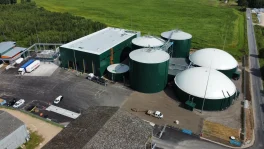
The company’s expansion already includes the Väo energy complex near Tallinn. In a 2024 update, Utilitas said its companies in Estonia and Latvia produced 425 GWh of energy in the second quarter of that year, with renewable energy accounting for 84% of the total.
That update identified new renewable-energy equipment at Väo, including flue-gas condensers, heat pumps, an electric boiler and a solar park. The complex’s expansion was also set to continue with a thermal-energy storage facility and a green-hydrogen production unit.
Expanding across the Baltic energy market
Utilitas is extending its development activity beyond Estonia as it expands energy production in all three Baltic states.
The group’s investment focus covers both heat and electricity. Its district-heating business is built around production facilities and networks serving urban customers, while its wider portfolio includes renewable electricity generation. Utilitas says district heating accounts for at least 60% of Estonia’s heat supply and that one-third of Estonia’s district-heating customers are served by the group.
By increasing local production, Utilitas is seeking to make its energy supply less sensitive to movements in global fuel markets while continuing the shift away from fossil fuels.
Interested in investing in Estonia? Explore business opportunities in Estonia or request e-Consulting from Invest Estonia’s advisors.