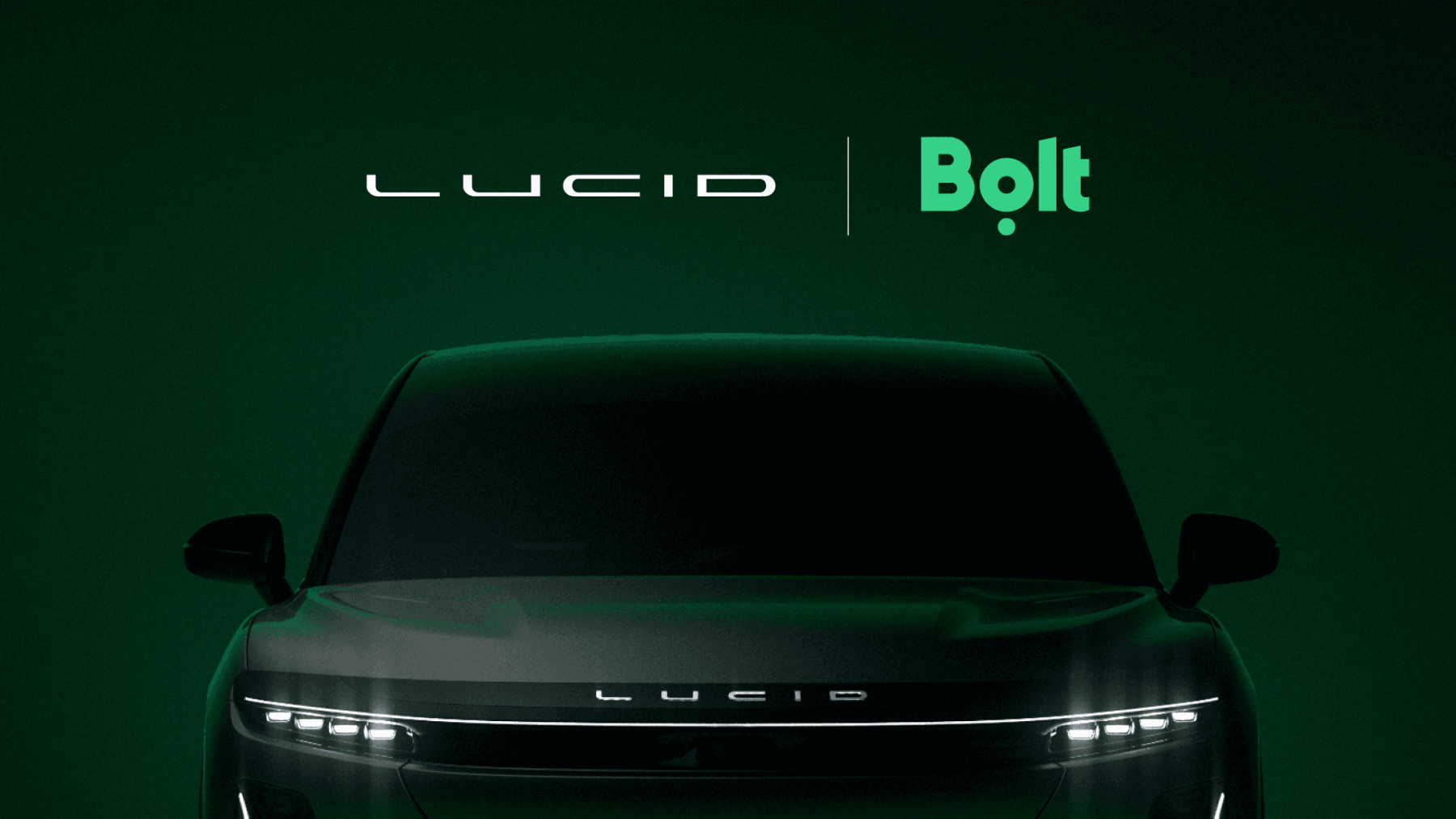
Bolt, the Estonian shared mobility platform, and US electric-vehicle maker Lucid Group will develop and deploy at least 25,000 fully autonomous vehicles across European cities.
The vehicles will be built on Lucid’s upcoming Midsize platform and are intended to operate without a driver in European traffic. Bolt’s stated ambition is to have 100,000 autonomous vehicles on its platform by 2035.
The companies will work together from the product-development stage on a vehicle platform ready for an autonomous driving system, designed for SAE Level 4 autonomy — the level at which a car handles all driving tasks within a defined operating area without human intervention. The platform is expected to use NVIDIA Hyperion, an autonomous-vehicle architecture that combines high-performance computing with a standardised sensor suite.
Autonomous vehicles designed for European roads
“Autonomous driving in Europe requires data, software, vehicles, and operations to work as one system built for European roads and regulation,” said Markus Villig, founder and CEO of Bolt. “Lucid brings a world-class platform, and together, we will co-design the vehicle and software based on our data and more than a decade of operating experience across more than 850 cities.”
Silvio Napoli, CEO of Lucid, said shared autonomous mobility offers the company a way to extend its technology beyond cars sold to private buyers. “Bolt’s reach and operating expertise make it an ideal partner to scale autonomous mobility across Europe,” he said.
Bolt to own and operate the fleet
The programme will be led by Bolt Autonomous Driving Solutions, the company’s dedicated autonomous-driving unit, which co-designs, integrates and commercialises autonomous mobility in Europe. Bolt will define vehicle requirements together with the software, safety and rider-experience parameters for vehicles running on its platform.
It will also build the fleet infrastructure, operating systems and city partnerships needed to run the service at scale, and intends to own and operate the fleet itself. On Lucid’s side the work will be led by Lucid Technologies, a newly established unit grouping the company’s artificial intelligence, driver-assistance, autonomy and digital functions.
Both companies will work with autonomous-driving technology partners, European regulators and policymakers to support the introduction of the services. Neither company disclosed the size of the investment or a timeline for the first deployment, Reuters reported.
The Midsize platform is an upcoming vehicle family positioned below the Air sedan and Gravity SUV Lucid builds today. The company designs and engineers its vehicles in-house and manufactures them at facilities in Arizona and Saudi Arabia.
Bolt builds out its autonomy programme
The agreement adds to a series of autonomy deals Bolt has signed over the past year, including plans with Stellantis to explore driverless technology in Europe and a partnership with NVIDIA on an autonomous-vehicle platform. In September Bolt, Pony.ai and Stellantis also announced a testing programme in Luxembourg.
Bolt operates in more than 50 countries and 850 cities, providing ride-hailing, scooter, e-bike and car rental services to over 200 million customers, with more than 4.5 million drivers and couriers using the platform. The company was founded in Tallinn in 2013.
Interested in investing in Estonia? Explore IT R&D / software / hardware opportunities. For tailored guidance, request e-Consulting from Invest Estonia’s advisors.