Estonia’s PISA 2025 results place the country among the world’s strongest education systems, with 15-year-old students ranking first in Europe in science and mathematics and second in reading.
The results, released by the OECD on 8 September, show Estonia scoring 527 points in science, 508 in mathematics and 499 in reading. Estonia ranked sixth in science, eighth in mathematics and reading, and seventh in the new computational problem-solving assessment among all participating countries and economies, according to ERR News. The country’s computational problem-solving score was 541 points. It’s aggregate score was the best among participating European nations.
PISA measures how well 15-year-olds can apply knowledge to unfamiliar problems rather than how closely they have followed a national curriculum. More than 760,000 students from 91 countries and economies took part in the 2025 assessment. Estonia’s sample included 6,304 students from 204 schools, representing approximately 14,600 15-year-olds.
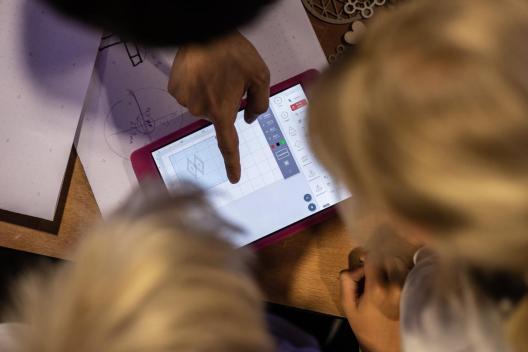
PISA 2025 results show strength in science and mathematics
Science was the main subject in the 2025 cycle. Around 90% of Estonian students reached at least Level 2 proficiency in science, compared with 74% across the OECD, while 11% reached the highest performance levels, against an OECD average of 7%. Students at Level 2 can recognise the correct explanation for familiar scientific phenomena and use data to judge whether a simple conclusion is valid.
In mathematics, 83% of Estonian students reached at least Level 2, compared with 65% across the OECD. The share of top performers was 13%, above the OECD average of 8%. In reading, 83% reached the baseline level, compared with 69% across the OECD, and 9% reached the highest levels, against an OECD average of 6%.
Digital problem-solving as a future-ready measure
The new computational problem-solving assessment measured learning in the digital world alongside the three core domains. Estonia recorded a mean score of 541 points, and 82% of students reached at least the baseline level, compared with 64% across the OECD. The assessment also examined students’ ability to self-direct their learning in a digital environment.
The OECD’s country note also records a strong learning orientation among Estonian students. Some 83% reported a growth mindset — the belief that abilities can develop through effort, work and feedback — compared with 69% across the OECD. Curiosity was also above the OECD average, with 76% of students saying they were curious about many different things, compared with 73% internationally.
Kristina Kallas, Minister of Education and Research, said the results demonstrate the quality of Estonia’s school education. “The fact that Estonian students are among Europe’s strongest performers in science and mathematics, and that a very large share of students attain at least the baseline level of proficiency, is a major achievement for our teachers and schools,” Kallas said in the ministry’s announcement.
An education system linked to digital skills
The findings build on a long-running pattern: Estonia’s 2022 PISA performance also placed its students among Europe’s strongest. Estonia’s education system highlights digital skills as a core focus. It expands beyond state system, through initiatives such as Estonian programming school //kood, which has trained students in Estonia and opened admissions in Ukraine and Kenya. Estonia has been also one of the first few countries to set a partnerships with major AI labs for a national-wide educational adoption.
The OECD found that Estonia’s comparatively broad performance base is also visible in its equity data. In science, students in the top quarter by socio-economic status outperformed those in the bottom quarter by 68 points, less than the OECD average gap of 85 points. Socio-economic status accounted for 10% of the variation in science performance in Estonia, compared with 12% across the OECD.
Reading performance was lower than in Estonia’s previous assessment, following a broader decline across developed education systems. Even so, Estonia remained second in Europe in reading and well above the OECD average, with more students reaching both the baseline and top performance levels.
Interested in investing in Estonia? Explore business opportunities in Estonia or request e-Consulting from Invest Estonia’s advisors.